
LEARN MORE
SIGHTINGS YEAR-ROUND
LEARN MORE
SIGHTINGS YEAR-ROUND
At O’Side Whales, we go out year-round, adapting to weather conditions. Each season is unique, offering the opportunity to spot different marine species depending on the time of year.
Year-Round
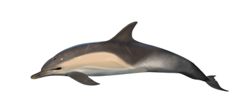
COMMON DOLPHINS
Common dolphins are among the most widespread and recognizable dolphin species in the world. Despite the name, there are actually two main species:
- Short-beaked common dolphin
- Long-beaked common dolphin
🌊 Appearance
Common dolphins are known for their striking coloration:
- A dark gray or black back
- A light underside (white or cream)
- A distinctive hourglass pattern on their sides in tan/yellow and gray
They are relatively small:
- Length: ~6–8 feet (1.8–2.5 m)
- Weight: ~150–300 lbs (70–135 kg)
🌍 Habitat & Range
These dolphins are found in temperate and tropical oceans worldwide, including:
- The Atlantic, Pacific, and Indian Oceans
- Frequently seen off the coast of California, including near Coronado
They prefer open ocean but sometimes come closer to shore.
🐟 Behavior & Diet
- Extremely social—often travel in pods of 100 to 1,000+ individuals
- Known for bow-riding (surfing waves created by boats)
- Feed mainly on:
- Fish (like anchovies and sardines)
- Squid
🧠 Intelligence & Communication
Like other dolphins, they are highly intelligent:
- Use clicks and whistles for communication and echolocation
- Capable of complex group coordination when hunting
⚡ Fun Facts
- Can swim up to 35 mph (56 km/h)
- Frequently perform acrobatic leaps and spins
- Among the most commonly seen dolphins on whale-watching tours
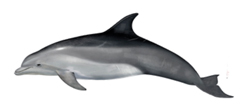
BOTTLENOSE DOLPHINS
Bottlenose dolphins are some of the most well-known and studied marine mammals. The most familiar species is the Common bottlenose dolphin, though there’s also the Indo-Pacific bottlenose dolphin.
🌊 Appearance
- Smooth, gray body (light gray underside, darker back)
- Distinctive “bottle-shaped” snout
- Curved dorsal fin
- Size:
- Length: ~8–13 feet (2.5–4 m)
- Weight: ~300–1,400 lbs (135–635 kg)
🌍 Habitat & Range
Bottlenose dolphins are found worldwide in:
- Tropical and temperate oceans
- Both coastal waters and open seas
They’re very common along the coast of California, including near Coronado, where they’re often seen close to shore or surfing waves.
🐟 Behavior & Diet
- Live in pods (usually 10–30, but can be larger)
- Diet includes:
- Fish
- Squid
- Crustaceans
- Use cooperative hunting strategies like:
- Herding fish into tight groups
- Mud-ring feeding (in some regions)
🧠 Intelligence
Bottlenose dolphins are among the most intelligent animals:
- Known for problem-solving and tool use
- Recognize themselves in mirrors (self-awareness)
- Communicate with signature whistles (like names)
They’ve been widely studied by organizations like National Oceanic and Atmospheric Administration.
🤝 Interaction with Humans
- Often approach boats and surfers
- Featured in popular media like the TV show Flipper
- Frequently seen on whale-watching tours
⚡ Fun Facts
- Can swim up to 20–25 mph (32–40 km/h)
- Hold their breath for 5–10 minutes
- Use echolocation to “see” in murky water
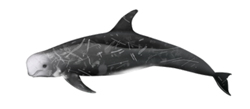
RISSO’S DOLPHINS
Risso’s dolphins (Grampus griseus) are a unique and easily recognizable species, quite different from the sleek look of bottlenose or common dolphins.
🌊 Appearance
- Stocky body with a blunt, rounded head (no prominent beak)
- Tall, curved dorsal fin
- Color changes with age:
- Younger: dark gray
- Older: light gray to almost white
- Covered in white scars from social interactions and squid prey
Size:
- Length: ~8.5–13 feet (2.6–4 m)
- Weight: ~660–1,100 lbs (300–500 kg)
🌍 Habitat & Range
Risso’s dolphins prefer deeper offshore waters, especially near continental slopes.
- Found worldwide in temperate and tropical oceans
- Common along the coast of California, including waters near Coronado
They’re often spotted farther offshore than bottlenose dolphins.
🐙 Diet
Unlike many dolphins that eat fish, Risso’s dolphins specialize in:
- Squid (their primary food)
- Occasionally fish
They typically hunt at night, when squid rise toward the surface.
🧠 Behavior
- Travel in pods of 10–50 (sometimes larger)
- Less acrobatic than common dolphins, but still capable of:
- Breaching (jumping out of the water)
- Spyhopping (raising head vertically)
They’re known for slow, deliberate movements compared to other dolphins.
🔊 Communication & Sounds
- Use clicks and whistles, but also produce:
- Buzzes
- Burst-pulse sounds for social interaction
⚡ Fun Facts
- Their scars act like a “life history record” of encounters
- They can dive to 1,000+ feet (300+ m) in search of squid
- Older individuals can look almost completely white due to scarring
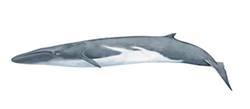
FIN WHALES
The fin whale (Balaenoptera physalus) is the second-largest animal on Earth, surpassed only by the blue whale. Sleek and fast, it’s often called the “greyhound of the sea.”
🌊 Appearance
- Long, slender body with a pointed head
- Dark gray-brown back and lighter underside
- Unique feature: asymmetrical coloring on the jaw
- Right side: lighter
- Left side: darker
- Small dorsal fin set far back on the body
Size:
- Length: ~60–85 feet (18–26 m)
- Weight: ~40–80 tons
🌍 Habitat & Range
- Found in all major oceans worldwide
- Prefer deep offshore waters, but may come closer to shore
They are regularly seen off California, including areas near Coronado, especially during feeding seasons.
🐟 Diet
Fin whales are baleen whales, meaning they filter food from the water.
They primarily eat:
- Krill
- Small schooling fish (like anchovies and sardines)
- Squid
They use a method called lunge feeding—rushing forward with mouths open to engulf huge volumes of water and prey.
⚡ Speed & Behavior
- Among the fastest whales, reaching up to 25 mph (40 km/h)
- Usually seen alone or in small groups
- Known for low, powerful blows (spouts)
🔊 Communication
- Produce very low-frequency sounds that can travel hundreds of miles underwater
- These calls are used for long-distance communication
⚠️ Conservation Status
- Listed as endangered
- Main threats:
- Ship strikes
- Ocean noise pollution
- Past commercial whaling
Organizations like the International Union for Conservation of Nature track their conservation status.
⚡ Fun Facts
- Their heart can weigh as much as a small car
- They can consume over a ton of food per day during feeding season
Despite their size, they are streamlined and surprisingly graceful
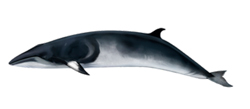
MINKE WHALES
Minke whales are the smallest of the baleen whales commonly seen in many oceans, but they’re still impressively large and fast swimmers. The most widespread species is the Common minke whale, along with the Antarctic minke whale.
🌊 Appearance
- Sleek, streamlined body
- Dark gray to black back with a lighter underside
- Pointed snout
- Small, curved dorsal fin
A key feature (especially in some populations):
- A white band on the flippers, sometimes called the “minke mittens”
Size:
- Length: ~23–35 feet (7–10.5 m)
- Weight: ~5–10 tons
🌍 Habitat & Range
- Found in all major oceans worldwide
- Adaptable: live in both coastal and offshore waters
They are occasionally spotted off California, including near Coronado, though they’re less commonly seen than larger whales like fin or blue whales.
🐟 Diet
Minke whales are baleen filter feeders.
They eat:
- Small fish (herring, anchovies)
- Krill
- Plankton
They use different feeding techniques depending on the region, including lunge feeding and more subtle, stealthy approaches.
⚡ Behavior
- Usually solitary or in very small groups
- Quick and somewhat elusive—often hard to spot
- Known for:
- Brief surfacing (you may only see the dorsal fin)
- Occasional breaching (jumping out of the water)
🔊 Sounds
- Produce a variety of vocalizations
- Some populations are known for unusual sounds like the mysterious “boing” calls in the Pacific
⚠️ Conservation
- Conservation status varies by species and population
- Generally more stable than many other large whales
- Still affected by:
- Whaling (in some regions)
- Ship strikes
- Ocean noise
Tracked by groups like the International Whaling Commission.
⚡ Fun Facts
- Among the fastest baleen whales
- Can stay underwater for up to 20 minutes
- Often overlooked because of their low-profile surfacing style
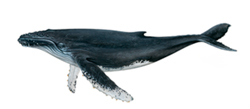
HUMPBACK WHALES
The humpback whale (Megaptera novaeangliae) is one of the most famous and beloved whale species—known for its spectacular breaching, long flippers, and haunting songs.
🌊 Appearance
- Large, robust body with a knobbly (bumpy) head
- Extremely long pectoral fins (up to 1/3 of body length)
- Distinctive hump in front of the dorsal fin
- Unique black-and-white tail flukes (like fingerprints)
Size:
- Length: ~40–60 feet (12–18 m)
- Weight: ~25–40 tons
🌍 Habitat & Migration
- Found in oceans worldwide
- Famous for long migrations between:
- Cold feeding grounds
- Warm breeding waters
Along California, including near Coronado, they’re commonly seen during migration and feeding seasons.
🐟 Diet & Feeding
Humpbacks are baleen whales that eat:
- Krill
- Small fish (anchovies, sardines, herring)
They use a unique and cooperative method called:
- Bubble-net feeding — groups create spirals of bubbles to trap fish, then surge upward together to feed
🎶 Songs & Communication
- Males produce complex songs lasting up to 20 minutes
- Songs can travel for miles underwater
- These songs evolve over time and may be related to mating
⚡ Behavior
Humpbacks are among the most acrobatic whales:
- Breaching (leaping out of the water)
- Tail slapping and pectoral fin slapping
- Often curious about boats
⚠️ Conservation
- Once heavily hunted, but populations have rebounded
- Now generally considered recovering, though still monitored
- Protected by organizations like the National Oceanic and Atmospheric Administration
⚡ Fun Facts
- Each tail pattern is unique, like a fingerprint
- Calves stay very close to their mothers during migration
- They can travel thousands of miles annually
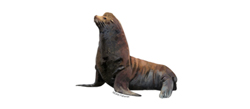
SEA LIONS
Sea lions are playful, intelligent marine mammals known for their loud barks and curious personalities. Along the West Coast, the most common species you’ll see is the California sea lion.
🌊 Appearance
- Streamlined, dog-like body
- External ear flaps (unlike true seals)
- Long front flippers used for “walking” on land
Size:
- Males: up to ~8 feet (2.4 m), 600–800 lbs
- Females: smaller, ~5–6 feet, 200–250 lbs
Males also develop a noticeable forehead bump (called a sagittal crest).
🌍 Habitat & Range
- Found along the Pacific Coast of North America
- Range: from Alaska down to Mexico
- Very common around California, including near Coronado
They gather on:
- Beaches
- Docks and buoys
- Rocky outcrops
🐟 Diet
Sea lions are skilled hunters and eat:
- Fish (anchovies, sardines, mackerel)
- Squid
- Occasionally octopus
They hunt both alone and in groups.
🧠 Intelligence & Behavior
- Highly intelligent and trainable
- Often used in research by organizations like the U.S. Navy Marine Mammal Program
- Very social—live in large colonies
You’ll often hear them before you see them thanks to their:
- Loud barking calls
⚡ Movement
- Excellent swimmers (up to ~25 mph / 40 km/h)
- Can dive to 600 feet (180 m)
- On land, they can rotate their hind flippers to walk—unlike seals
⚠️ Conservation
- Currently not endangered
- Protected under the Marine Mammal Protection Act
Main challenges:
- Entanglement in fishing gear
- Ocean pollution
- Changes in fish availability
⚡ Fun Facts
- Can sleep in the water by floating upright
- Pups recognize their mothers by sound and smell
- Often steal fish from fishing lines (much to fishermen’s frustration!)
Winter Visitors
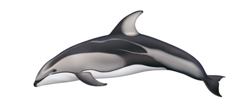
PACIFIC WHITE-SIDED DOLPHINS
The Pacific white-sided dolphin (Lagenorhynchus obliquidens) is one of the most energetic and visually striking dolphins found in the North Pacific.
🌊 Appearance
- Bold, three-tone coloration:
- Dark gray/black back
- Light gray sides
- White belly
- Distinctive light gray “stripe” along the side
- Short beak and sleek, streamlined body
Size:
- Length: ~6–8 feet (1.8–2.5 m)
- Weight: ~300–400 lbs (135–180 kg)
🌍 Habitat & Range
- Found only in the North Pacific Ocean
- Prefer cool, temperate waters
- Common along the coast of California, especially offshore from Coronado
They tend to stay in deeper offshore waters, but sometimes come closer to shore.
🐟 Behavior & Diet
- Extremely social and fast-moving
- Travel in pods of:
- 10–100 individuals (sometimes more)
- Known for:
- High leaps and flips
- Riding waves and boat wakes
Diet includes:
- Fish (anchovies, herring, sardines)
- Squid
🧠 Intelligence & Communication
- Use echolocation clicks to hunt
- Communicate with whistles and body movements
- Highly coordinated when hunting in groups
⚡ Fun Facts
- Can swim up to 30+ mph (48+ km/h)
- Often mix with other dolphin species in “superpods”
- Considered one of the most acrobatic dolphins in the Pacific
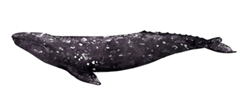
GRAY WHALES
The gray whale (Eschrichtius robustus) is one of the most famous whales along the West Coast—especially known for its epic migrations and coastal visibility.
🌊 Appearance
- Mottled gray skin with white patches (from barnacles and scars)
- No dorsal fin—instead, a series of small bumps (“knuckles”) along the back
- Broad, slightly arched head
Size:
- Length: ~40–50 feet (12–15 m)
- Weight: ~30–40 tons
🌍 Habitat & Migration
Gray whales are best known for one of the longest migrations of any mammal:
- Travel between:
- Feeding grounds in the Arctic
- Breeding lagoons in Mexico
They pass right along the coast of California, including near Coronado, making them one of the easiest whales to see from shore during migration.
🦐 Diet & Feeding
Gray whales are bottom feeders, which is unusual among whales.
They eat:
- Small crustaceans (like amphipods)
- Worms and other seafloor organisms
Feeding method:
- Roll onto their side
- Scoop up sediment from the ocean floor
- Filter food using baleen plates
⚡ Behavior
- Often travel close to shore
- Usually seen alone or in small groups
- Known for:
- Spouts (blows) visible from a distance
- Rolling and side-swimming while feeding
👶 “Friendly” Whales
Gray whales have a reputation for curiosity:
- Some approach boats, especially in breeding lagoons
- Nicknamed “friendly whales” in places like Baja California
⚠️ Conservation
- Eastern North Pacific population has recovered well from whaling
- Protected under laws like the Marine Mammal Protection Act
- Still face threats:
- Climate change (affecting food supply)
- Ship strikes
- Entanglement
⚡ Fun Facts
- Migration can exceed 10,000 miles (16,000 km) round trip
- Calves are born in warm, shallow lagoons
Barnacles and whale lice give them a rough, patchy look
Summer Visitors
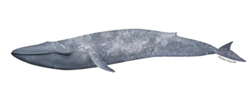
BLUE WHALES
The blue whale (Balaenoptera musculus) is the largest animal ever known to have existed on Earth—bigger than any dinosaur.
🌊 Appearance
- Long, sleek body in bluish-gray coloration (often looks light blue underwater)
- Broad, flat head with a U-shaped snout
- Very small dorsal fin far back on the body
- Long, slender shape built for efficient swimming
Size:
- Length: ~80–100+ feet (24–30+ m)
- Weight: ~100–180 tons
A blue whale’s heart alone can weigh as much as a small car.
🌍 Habitat & Range
- Found in all major oceans worldwide
- Prefer deep offshore waters, especially where krill is abundant
Along the U.S. West Coast, they are regularly seen off California, including offshore waters near Coronado, particularly during summer feeding seasons.
🦐 Diet
Blue whales are baleen filter feeders and eat almost exclusively:
- Krill (tiny shrimp-like crustaceans)
They can consume:
- Up to 4 tons of krill per day during peak feeding
Feeding method:
- Take huge lunges of water
- Expand throat pleats
- Filter krill through baleen plates
🔊 Communication
- Produce some of the loudest and lowest-frequency sounds in the animal kingdom
- Calls can travel hundreds of miles underwater
- Likely used for long-distance communication and mating
⚡ Behavior
- Usually seen alone or in small groups
- Despite their size, they are graceful and fast swimmers
- Blow (spout) can rise 30 feet (9 m) into the air
⚠️ Conservation Status
- Listed as Endangered
- Populations were heavily reduced by commercial whaling
Current protections and monitoring are supported by organizations like the International Whaling Commission and the National Oceanic and Atmospheric Administration.
Main threats today:
- Ship strikes
- Ocean noise pollution
- Climate-driven changes in krill availability
⚡ Fun Facts
- A blue whale’s tongue alone can weigh as much as an elephant
- A calf drinks around 100 gallons (380 liters) of milk per day
- They can reach speeds of 20+ mph (32 km/h) in short bursts
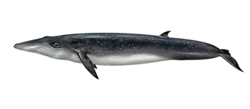
BRYDE’S WHALES
Bryde’s whales (Balaenoptera brydei) are sleek, fast baleen whales that are often overlooked because they closely resemble other rorqual whales—and because they can be surprisingly hard to spot.
They’re named after Johan Bryde, a Norwegian whaler who helped establish early whaling stations in South Africa.
🌊 Appearance
- Long, streamlined body (similar to fin whales, but smaller)
- Dark gray to bluish-gray coloration
- Three distinct ridges on the top of the head (a key ID feature)
- Curved dorsal fin set far back on the body
Size:
- Length: ~40–55 feet (12–17 m)
- Weight: ~13–25 tons
🌍 Habitat & Range
Bryde’s whales prefer warm, tropical to subtropical waters.
- Found in the Atlantic, Pacific, and Indian Oceans
- Unlike many whales, they are non-migratory or only locally migratory
They are considered rare but possible offshore visitors along California, including deeper waters near Coronado, especially during warm-water years.
🐟 Diet
Bryde’s whales are active hunters that feed on:
- Small schooling fish (anchovies, sardines, mackerel)
- Squid
- Occasionally crustaceans
They often feed by:
- Lunging through bait balls
- Taking repeated surface-level strikes
⚡ Behavior
- Usually solitary or in pairs
- More active and erratic compared to some other large whales
- Can surface unpredictably, making sightings exciting but brief
🔊 Sounds
- Produce short, low-frequency moans and pulses
- Vocalizations vary by region, suggesting possible distinct populations
⚠️ Conservation
- Global conservation status is uncertain due to past confusion with similar species
- Threats include:
- Ship strikes
- Fishing gear entanglement
- Ocean noise
Monitored by organizations such as the International Whaling Commission.
⚡ Fun Facts
- Often confused with fin or sei whales at sea
- The “three head ridges” are the best way to identify them
- In some regions, they may feed near the surface in explosive bursts
Rare Sightings
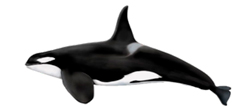
ORCAS (KILLER WHALES)
Orcas, also known as killer whales, are the largest members of the dolphin family and one of the ocean’s most powerful predators. Their scientific name is Orcinus orca.
🌊 Appearance
- Striking black-and-white coloration
- Tall, triangular dorsal fin (especially large in males—up to ~6 feet / 1.8 m)
- White patches:
- Behind the eye (“eye patch”)
- Under the belly
- Near the flanks
Size:
- Males: ~20–26 feet (6–8 m), up to ~12,000 lbs
- Females: ~16–23 feet (5–7 m), smaller and more slender
🌍 Habitat & Range
Orcas are found in every ocean on Earth, from polar regions to tropical waters.
They are occasionally seen off California, including near Coronado, especially during migrations of prey species like gray whales.
🐟 Diet & Hunting
Orcas are apex predators, meaning they have no natural predators.
Their diet varies by “ecotype” (regional groups):
- Fish (salmon, herring)
- Squid
- Marine mammals (seals, sea lions, dolphins)
- Occasionally large whales (including calves)
They use highly coordinated hunting strategies, such as:
- Wave-washing seals off ice
- Cooperative “carousel feeding” to trap fish
- Team hunting of whales
🧠 Intelligence & Culture
Orcas are among the most intelligent marine animals:
- Live in tight family groups called pods
- Use distinct vocal dialects (like regional languages)
- Teach hunting techniques across generations
Some populations are studied by organizations like the National Oceanic and Atmospheric Administration.
🔊 Communication
- Produce clicks, whistles, and pulsed calls
- Each pod has its own signature vocal patterns
- Sound is used for coordination and social bonding
⚡ Behavior
- Highly social and matriarchal (led by older females)
- Fast swimmers (up to ~35 mph / 56 km/h)
- Known for breaching, spyhopping, and playful behavior
⚠️ Conservation
- Global population status varies by region
- Some populations are stable, while others are endangered
- Threats include:
- Loss of prey (especially salmon in some regions)
- Ocean pollution (PCBs, toxins)
- Noise interference
⚡ Fun Facts
- Orcas are actually the largest dolphins, not whales in the strict taxonomic sense
- No verified natural predators
- Different populations have completely different “cultures” and hunting styles
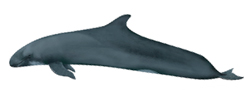
FALSE KILLER WHALES
False killer whales are large, highly social dolphins—not true whales—and are named for their skull shape, which resembles that of orcas. Their scientific name is Pseudorca crassidens.
The “S” in your message likely refers to the plural—so here’s the species overview.
🌊 Appearance
- Sleek, dark gray to black body
- Long, slender shape compared to orcas
- Slight bulge on the forehead (less pronounced than bottlenose dolphins)
- No bold black-and-white pattern like orcas
Size:
- Length: ~15–20 feet (4.5–6 m)
- Weight: ~1,000–3,000 lbs (450–1,400 kg)
🌍 Habitat & Range
- Found in tropical and warm-temperate oceans worldwide
- Prefer deep offshore waters, but sometimes approach coastlines
They are rare but occasionally reported off California, including offshore waters near Coronado, usually in deeper pelagic zones.
🐟 Diet & Hunting
False killer whales are top-level predators that hunt:
- Fish (especially tuna and mahi-mahi)
- Squid
- Occasionally marine mammals
They are known for:
- Cooperative hunting in groups
- Sharing large prey among pod members
- Strong, fast pursuit hunting in open ocean
🧠 Behavior & Social Life
- Highly social, living in pods of 10–50 (sometimes 100+)
- Strong social bonds and food sharing behavior
- Very active and fast swimmers
They are known to sometimes interact socially with other dolphin species, including bottlenose dolphins.
🔊 Communication
- Use whistles, clicks, and pulsed calls
- Pods may have unique vocal “styles”
- Rely heavily on sound for coordination while hunting
⚡ Behavior
- Known for high energy and long-distance travel
- Can approach boats and sometimes bow-ride
- Occasionally strand in groups (rare but documented)
⚠️ Conservation
- Some populations are considered vulnerable or at risk
- Main threats:
- Fisheries bycatch (accidental capture in nets/longlines)
- Decreased prey availability
- Ocean noise
Monitored by groups including the International Whaling Commission and regional marine agencies.
⚡ Fun Facts
- Despite the name, they are not closely related to killer whales (orcas)
- Can share large fish catches among group members
Sometimes form mixed pods with other dolphin species
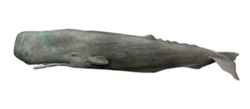
SPERM WHALES
The sperm whale (Physeter macrocephalus) is the largest of the toothed whales and one of the deepest-diving mammals on Earth. It’s famous for its massive square head and its role in the classic novel Moby-Dick.
🌊 Appearance
- Enormous block-shaped head (about 1/3 of body length)
- Wrinkled, dark gray to brown body
- Narrow lower jaw lined with large teeth (only on the bottom jaw)
- Distinctive low, bushy blow angled forward and to the left
Size:
- Males: ~50–60+ feet (15–18+ m)
- Females: ~30–40 feet (9–12 m)
- Weight: up to ~45 tons
🌍 Habitat & Range
- Found in deep oceans worldwide
- Prefer deep water near continental slopes and submarine canyons
They are occasionally seen off California, including offshore areas near Coronado, especially where deep water drops off quickly.
🦑 Diet & Feeding
Sperm whales are specialized hunters of deep-sea prey:
- Mainly giant and deep-sea squid
- Also fish and other deep-ocean creatures
They perform some of the deepest dives of any animal:
- Typical dives: 1,000–3,000 feet (300–900 m)
- Maximum recorded: over 10,000 feet (3,000 m)
They use echolocation “clicks” to locate prey in total darkness.
🧠 Brain & Communication
- Possess the largest brain of any known animal
- Use powerful click patterns called “codas”
- Communicate within family groups (often called pods or clans)
Researchers like those at National Oceanic and Atmospheric Administration study their complex social behavior.
⚡ Behavior
- Live in matriarchal family groups (females and young)
- Adult males often travel alone or in small bachelor groups
- Spend long periods deep underwater hunting
- Surface for rest, breathing, and socializing
🔊 The “Clicking Whale”
- Produce some of the loudest sounds in the animal kingdom
- Their echolocation clicks can be used both for:
- Navigation
- Stunning or detecting prey
⚠️ Conservation
- Once heavily hunted during commercial whaling
- Now protected internationally and recovering slowly
- Ongoing threats include:
- Ship strikes
- Ocean noise pollution
- Plastic ingestion
⚡ Fun Facts
- Their head contains a large organ once called the “spermaceti organ” (used for sound focusing and buoyancy control)
- They can hold their breath for over 90 minutes
- They are one of the most socially complex whale species
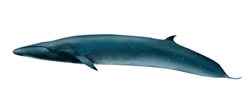
SEI WHALES
The sei whale (Balaenoptera borealis) is one of the fastest and least well-known large baleen whales. It’s often called a “stealth whale” because it’s hard to spot and commonly confused with other species.
🌊 Appearance
- Sleek, streamlined body similar to fin and Bryde’s whales
- Dark gray to bluish-gray back
- Slight curve to the dorsal fin (more upright than Bryde’s)
- Single ridge on the top of the head (unlike Bryde’s three ridges)
Size:
- Length: ~40–60 feet (12–18 m)
- Weight: ~20–30 tons
🌍 Habitat & Range
- Found in all major oceans worldwide
- Prefer deep offshore waters, especially temperate zones
They can occasionally be found off California, including deeper waters near Coronado, but sightings are rare compared to other rorquals like fin or blue whales.
🐟 Diet
Sei whales are baleen filter feeders and eat:
- Copepods (tiny crustaceans)
- Krill
- Small fish
They often feed in mid-water rather than at the surface or seafloor.
⚡ Behavior
- Among the fastest whales, capable of bursts up to ~30 mph (48 km/h)
- Usually seen alone or in small groups
- More elusive and less predictable than many other baleen whales
- Can surface briefly and disappear quickly
🔊 Sounds
- Produce low-frequency moans and pulses
- Vocal behavior is less studied than many other whales due to their rarity
⚠️ Conservation
- Listed as Endangered in many regions
- Heavily impacted by historic whaling
- Current threats include:
- Ship strikes
- Entanglement in fishing gear
- Climate-related changes in plankton distribution
Monitored by organizations such as the International Whaling Commission.
⚡ Fun Facts
- The name “sei” comes from the Norwegian word for pollock, because whales appeared off Norway when fish were abundant
- They are sometimes called the “least known great whale”
- Their speed makes them one of the hardest whales to study in the wild
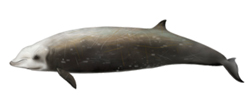
BEAKED WHALES
Beaked whales are one of the most mysterious groups of marine mammals. They belong to a deep-diving family of toothed whales called Ziphiidae. One example is the Cuvier’s beaked whale, one of the most commonly encountered beaked whale species worldwide.
🌊 Appearance
Beaked whales are built for deep diving and are often hard to identify at sea.
- Long, torpedo-shaped body
- Small dorsal fin set far back
- Slender “beak-like” snout (varies by species)
- Males often have visible tusk-like teeth (used for fighting, not feeding)
Size (varies by species):
- ~13–43 feet (4–13 m)
- Generally medium-to-large sized whales
🌍 Habitat & Range
- Found in deep oceans worldwide
- Strongly associated with steep underwater canyons and continental slopes
- Rarely seen near shore unless deep water is close
Along California, including offshore areas near Coronado, beaked whales may occur in deep submarine canyon systems, but sightings are very rare.
🦑 Diet & Feeding
Beaked whales are deep-sea squid specialists.
They feed on:
- Squid (primary food source)
- Deep-sea fish
- Occasional crustaceans
They are among the deepest-diving mammals on Earth, with dives often:
- 1,000–3,000+ feet (300–1,000+ m)
- Sometimes lasting over an hour
They use suction feeding rather than biting prey.
⚡ Behavior
- Usually solitary or in small groups (2–7 animals)
- Extremely elusive—most knowledge comes from strandings and acoustic studies
- Spend very little time at the surface
- Often surface briefly and then disappear for long dives
🔊 Communication
- Produce high-frequency echolocation clicks
- Less vocal than many dolphins, making them harder to study
- Some species are sensitive to underwater noise
⚠️ Conservation
- Many species are poorly understood due to their deep-water lifestyle
- Threats include:
- Naval sonar (linked to strandings in some cases)
- Fishing gear entanglement
- Ocean noise pollution
Monitored by organizations such as the National Oceanic and Atmospheric Administration.
⚡ Fun Facts
- Some species are so rarely seen that much of what we know comes from acoustic recordings only
- They are considered among the most elusive large mammals on Earth
- Males of some species use their teeth in sparring battles, leaving scars
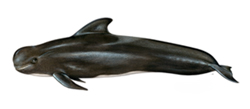
PILOT WHALES
Pilot whales are large, highly social dolphins known for their strong family bonds and tendency to travel in tight-knit groups. There are two main species:
- Globicephala melas
- Globicephala macrorhynchus
The short-finned pilot whale is the one most commonly found in warmer waters, including parts of the Pacific near California.
🌊 Appearance
- Dark black to deep gray body
- Bulbous, rounded forehead (“melon”)
- Short beak (often barely visible)
- Long, sickle-shaped flippers
Size:
- Males: ~18–25 feet (5.5–7.5 m)
- Females: ~12–18 feet (3.5–5.5 m)
- Weight: up to ~6,000 lbs (2,700 kg)
🌍 Habitat & Range
- Found in deep offshore waters worldwide
- Prefer warm-temperate to tropical oceans
Along the U.S. West Coast, short-finned pilot whales may be seen offshore of California, including deep waters near Coronado, though sightings are uncommon.
🐟 Diet
Pilot whales are deep-diving hunters that eat:
- Squid (primary food source)
- Small fish
- Occasionally deep-sea species
They can dive:
- Over 1,000–2,000 feet (300–600+ m)
- For 10–20+ minutes at a time
🧠 Social Behavior
Pilot whales are among the most social marine mammals:
- Live in stable family groups of 20–100+ individuals
- Strong, lifelong bonds (especially between mothers and calves)
- Known for stranding together in large groups (mass strandings are a known phenomenon)
🔊 Communication
- Use whistles, clicks, and pulsed calls
- Pods often have distinct “dialects”
- Sound plays a major role in maintaining group cohesion
⚡ Behavior
- Slow, steady swimmers but capable of bursts of speed
- Often surface in synchronized groups
- Sometimes approach boats out of curiosity
⚠️ Conservation
- Global status varies by population
- Main threats include:
- Entanglement in fishing gear
- Ship strikes
- Noise pollution
- Prey depletion
Studied by organizations such as the National Oceanic and Atmospheric Administration.
⚡ Fun Facts
- Despite the name, pilot whales are actually large dolphins, not true whales
- Known for extremely tight social bonds—pods behave almost like extended families
One of the few cetaceans that regularly engage in mass strandings
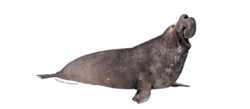
ELEPHANT SEALS
Elephant seals are massive, deep-diving marine mammals named for the adult male’s large, trunk-like nose. The two species are:
- Northern elephant seal (common along California)
- Southern elephant seal (mostly sub-Antarctic)
Along the California coast, including near Coronado, you’ll only see the northern elephant seal.
🌊 Appearance
- Extremely large, barrel-shaped body
- Males have a large “elephant trunk” nose (used for loud roaring)
- Thick, wrinkled skin that looks almost elephant-like
- Females are much smaller and sleeker
Size:
- Males: up to ~13–16 feet (4–5 m), 2,000–5,000+ lbs
- Females: ~9–12 feet (3–3.7 m), 900–1,800 lbs
🌍 Habitat & Range
- Spend most of their lives at sea in the open Pacific Ocean
- Only come ashore to breed, give birth, and molt
- Major colonies along California include Año Nuevo, Point Reyes, and Piedras Blancas
Near San Diego, they’re usually seen offshore in winter and spring, or occasionally hauled out farther north.
🐟 Diet & Diving
Elephant seals are among the deepest-diving mammals on Earth:
They eat:
- Squid
- Deep-sea fish
- Rays and other midwater prey
Diving abilities:
- Depths over 5,000 feet (1,500+ m)
- Dives lasting up to 2 hours
- Spend ~90% of their life underwater
⚡ Behavior
- Extremely aggressive during breeding season (males fight for territory)
- On land, they gather in large noisy colonies called rookeries
- At sea, they are mostly solitary
Males produce loud, roaring calls using their inflatable nasal structure.
🔊 Communication
- On land: loud roars, grunts, and bellows
- Underwater: quieter sounds used for navigation and interaction
- Vocal intensity increases dramatically during mating season
⚠️ Conservation
- Once heavily hunted for oil in the 1800s
- Now a major conservation success story
- Populations along California have recovered strongly
Still protected under the Marine Mammal Protection Act.
⚡ Fun Facts
- Males can fast for months during breeding season
- Their noses act like a resonating chamber for sound
- Despite their size, they are agile swimmers in deep water
Non-Mammals
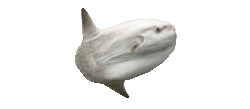
OCEAN SUNFISH (MOLA MOLA)
The ocean sunfish, also known as the mola mola, is one of the most unusual-looking fish in the ocean. Its scientific name is Mola mola.
It’s famous for its giant, disc-shaped body and strange “floating head” appearance.
🌊 Appearance
- Large, flattened, almost circular body
- No true tail fin—instead a clavus (stiff steering fin)
- Very small mouth compared to body size
- Smooth skin often covered with parasites
Size:
- Length (fin to fin): up to ~10–11 feet (3 m)
- Weight: ~1,000–5,000 lbs (450–2,300 kg)
Despite their size, they look almost like a floating head with fins.
🌍 Habitat & Range
- Found in temperate and tropical oceans worldwide
- Often seen near the surface, but also dives deep
They occasionally appear off California, including offshore waters near Coronado, especially during warm-water periods.
🐟 Diet
Ocean sunfish eat soft-bodied prey such as:
- Jellyfish (primary food)
- Salps
- Small fish and plankton
They must eat large volumes of low-nutrient food to sustain their massive bodies.
⚡ Behavior
- Often seen basking at the surface (“sunbathing” behavior)
- Can drift vertically or sideways in the water
- Strong deep divers, reaching several hundred meters
They are generally slow swimmers, relying on ocean currents.
🧠 Biology & Adaptations
- Can produce millions of eggs at a time (among the highest of any vertebrate)
- Frequently covered in parasites, which attracts cleaning fish
- Have a very unusual body shape among bony fish
⚠️ Conservation
- Not currently endangered
- Threats include:
- Plastic pollution (mistaken for jellyfish)
- Bycatch in fishing nets
- Boat strikes
⚡ Fun Facts
- The largest bony fish in the world
- Can jump fully out of the water (breaching behavior)
- Often mistaken for floating debris due to their odd shape
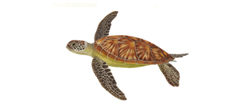
SEA TURTLES
Sea turtles are ancient marine reptiles that have been swimming Earth’s oceans for over 100 million years. Unlike turtles that live on land, sea turtles are fully adapted for life in the ocean.
Along the U.S. West Coast, including near Coronado and California, the species most commonly encountered is the Green sea turtle, along with occasional sightings of the Loggerhead sea turtle.
🌊 Appearance
- Streamlined, teardrop-shaped shell (carapace)
- Large front flippers shaped like paddles for swimming
- Reptilian head with no ability to retract fully into the shell
- Colors vary by species:
- Green turtles: olive to brownish shell
- Loggerheads: reddish-brown shell with large head
🌍 Habitat & Range
- Found in tropical and subtropical oceans worldwide
- Spend most of their lives at sea
- Females return to land only to nest
Off California:
- Green sea turtles are often seen in warm nearshore waters, bays, and lagoons
- Loggerheads are rarer but may pass offshore during migrations
🐟 Diet
Varies by species:
- Green sea turtles (adults): mostly seagrass and algae
- Loggerheads: crabs, jellyfish, mollusks, and other hard-shelled prey
🧭 Life Cycle & Behavior
- Females return to the same beaches where they were born to lay eggs
- Hatchlings make a dangerous journey from nest to ocean
- Long-distance migrators, traveling thousands of miles across oceans
They spend most of their lives:
- Swimming
- Foraging
- Resting near reefs, seagrass beds, or open ocean currents
🧠 Adaptations
- Can hold their breath for hours while resting
- Use Earth’s magnetic field for navigation
- Strong flippers built for long-distance travel
⚠️ Conservation
Many sea turtle species are threatened or endangered due to:
- Habitat loss (especially nesting beaches)
- Plastic ingestion (mistaking bags for jellyfish)
- Fishing bycatch
- Climate change affecting nesting temperatures
Protected by international efforts including the National Oceanic and Atmospheric Administration.
⚡ Fun Facts
- Sea turtles have existed since the time of dinosaurs
- Hatchlings are only about the size of a ping-pong ball
- They can migrate across entire ocean basins
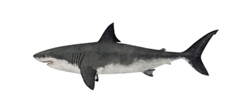
SHARKS
Sharks are a diverse group of cartilaginous fish that have been in Earth’s oceans for over 400 million years—long before dinosaurs. They range from tiny reef species to massive open-ocean predators.
Along the waters off California, including near Coronado, several shark species are commonly encountered.
🐋 Common Sharks in Southern California
🦈 Great White Shark
Great white shark
- Large apex predator
- Found in cool, coastal waters
- Often associated with seal and sea lion colonies
- More common offshore or seasonally near shore (especially juveniles in California)
🦈 Leopard Shark
Leopard shark
- Harmless to humans
- Common in shallow bays and sandy bottoms
- Distinctive dark saddle-like markings
- Frequently seen in California coastal waters
🦈 Hammerhead Shark
Scalloped hammerhead shark
- Unique “hammer-shaped” head for sensing prey
- Often travels in schools
- More common in warmer offshore waters
🦈 Mako Shark
Shortfin mako shark
- One of the fastest sharks in the ocean
- Open-water hunter of fast fish like tuna
- Rare near shore, more common offshore Southern California
🦈 Blue Shark
Blue shark
- Slender, deep-blue coloration
- Highly migratory open-ocean species
- One of the most commonly caught offshore sharks (usually far from shore)
🌊 Habitat & Behavior
- Sharks live in all oceans, from shallow surf zones to deep sea
- Some species are coastal (like leopard sharks), others are pelagic (open ocean)
- Many species migrate long distances following temperature and prey
🧠 Senses & Hunting
Sharks are highly specialized predators:
- Electroreception: detect tiny electrical signals from prey
- Strong sense of smell
- Excellent motion detection in low light
- Many use ambush or high-speed pursuit strategies
⚠️ Conservation
Many shark populations are under pressure globally due to:
- Overfishing and bycatch
- Demand for fins and meat
- Slow reproductive rates
Organizations like the National Oceanic and Atmospheric Administration monitor shark populations and manage protections in U.S. waters.
⚡ Fun Facts
- Sharks do not have bones—their skeletons are made of cartilage
- Some species must swim constantly to breathe, while others can rest on the seafloor
- Leopard sharks are among the most commonly seen sharks in California tide pools and shallow bays
- Great whites can detect a drop of blood in millions of gallons of water
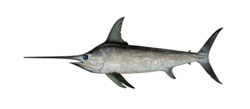
SWORDFISH & MARLIN
Swordfish and marlin are fast, powerful, open-ocean predators known for their long “bills” (rostrums) and incredible speed. They are among the most iconic billfish found in warm and temperate seas.
🐟 Swordfish
The swordfish (Xiphias gladius) is a deep-bodied, solitary hunter.
🌊 Appearance
- Long, flat “sword” on the upper jaw
- No pelvic fins or scales (smooth skin)
- Dark bluish-gray above, silvery below
Size:
- Length: ~6–15 feet (2–4.5 m)
- Weight: ~200–1,400 lbs (90–650 kg)
🌍 Habitat
- Found in tropical and temperate oceans worldwide
- Prefer deep offshore waters, often near steep drop-offs
- Occasionally come closer to surface at night to feed
Off California, swordfish are found offshore, including deeper waters near Coronado.
🐟 Behavior & Diet
- Solitary, fast-moving predators
- Feed on:
- Squid
- Mackerel
- Other schooling fish
They use their bill to slash and stun prey before eating.
⚡ Fun Facts
- Can heat parts of their eyes and brain for better hunting in cold deep water
- Among the fastest fish in the ocean
- Often migrate vertically between deep day waters and shallow night waters
🐟 Marlin
“Marlin” refers to several species of fast billfish, including:
- Blue marlin (Makaira nigricans)
- Black marlin (Istiompax indica)
- Striped marlin (Kajikia audax)
🌊 Appearance
- Long, spear-like bill
- Tall, rigid dorsal fin (often sail-like)
- Sleek, powerful body built for speed
- Striped or deep blue coloration depending on species
Size:
- 6–16+ feet (2–5 m+) depending on species
- Can weigh from 100 lbs to over 1,500 lbs
🌍 Habitat
- Found in warm tropical and subtropical oceans
- Highly migratory open-ocean predators
- Common in the eastern Pacific offshore waters of California, including areas off Coronado
🐟 Behavior & Diet
- Extremely fast swimmers and powerful hunters
- Feed on:
- Tuna
- Mackerel
- Squid
They use their bill to stun or injure schooling fish, then circle back to feed.
⚡ Fun Facts
- Some of the fastest fish in the ocean (over 50 mph in bursts)
- Famous in sport fishing for their strength and jumps
- Marlin often leap completely out of the water when hooked
⚖️ Swordfish vs Marlin (Quick ID)
- Swordfish: flat sword, no dorsal fin
- Marlin: spear bill + tall sail-like dorsal fin
- Swordfish are more solitary and deep-diving
- Marlin are more surface-active and acrobatic
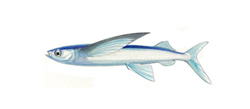
FLYING FISH
Flying fish are small ocean fish famous for their ability to glide above the water’s surface to escape predators. The most common type belongs to the family Exocoetidae.
They don’t truly “fly” like birds—they glide using wing-like fins.
🌊 Appearance
- Slender, torpedo-shaped body
- Very large pectoral fins (look like wings)
- In some species, enlarged pelvic fins as well
- Silvery-blue coloration for camouflage
Size:
- Typically ~6–18 inches (15–45 cm), depending on species
🌍 Habitat & Range
- Found in warm tropical and subtropical oceans worldwide
- Often near the surface of open water
- Frequently seen in the Pacific Ocean, including offshore waters near California, especially farther offshore from Coronado
🪽 How They “Fly”
Flying fish use a three-step escape strategy:
- Burst swimming: They accelerate rapidly underwater
- Launch: They break the surface at high speed
- Glide: Spread fins and glide above waves for up to 200–650 feet (60–200 m)
Some species can even make repeated “hops” across the water.
🐟 Diet & Predators
- Feed on:
- Plankton
- Small crustaceans
- Fish eggs
They are preyed upon by:
- Tuna
- Marlin
- Dolphins
- Seabirds
⚡ Behavior
- Often travel in schools near the surface
- Most active at night
- Use gliding as a defense mechanism against fast predators
⚡ Fun Facts
- Their “flight” is actually a controlled glide powered by tail beats on water
- Some species can stay airborne for nearly 30 seconds
- Sailors historically used them as indicators of warm-water currents
- They are sometimes seen jumping in groups, creating the illusion of “rain” above the ocean
CONTACT US
Delighted to hear from you!